

Why BAK is commonly used in ophthalmic products and therapies
Benzalkonium chloride (BAK) is used as a preservative in around 70% of ophthalmic formulations, including eye drops.1 It’s commonly used because it can help maintain sterility, particularly in multi-dose ophthalmic formulations.
Despite preservative free development there is still a prevalent use of preserved eye drops or formulations which is likely to be due to its cost efficiency for treating long-term eye conditions such as open-angle glaucoma. However there is a biological cost of adding preservatives to eye care products, with research suggesting it can clinically impact patient outcomes.
Clinical impacts of BAK on the ocular surface
BAK may clinically impact the ocular surface for some patients.
One study found that short-term exposure to BAK may alter the precorneal mucin, which is important for maintaining the integrity of the tear film. This may lead to several side effects, including conjunctival hyperemia, decreased tear production, tear film instability, and superficial punctate keratitis.2
Meanwhile, long-term exposure to BAK has been linked to an increased risk of developing ocular surface disease (OSD). Research found that chronic use of topical glaucoma treatment containing BAK may have caused a reduction in superficial epithelial cells, which protect the cornea. As a result, tear film instability and ocular surface alterations may increase in prevalence among glaucoma patients undergoing preserved treatments.3
Professor Harminder Dua, one of the world's leading authorities on the cornea and ocular surface disease, explains some of the main reasons why BAK can be so damaging in the video below:
Reducing BAK in practice
Reducing BAK in practice wherever possible is crucial. Clinicians and eye care professionals can offer or recommend preservative-free formulations if suitable and available to help avoid damage to the ocular surface.
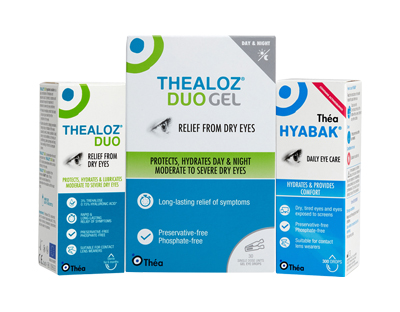
At Théa Pharmaceuticals, we’re passionate about preservative-free eye care and how it can benefit ophthalmology. We continuously strive to develop our research and understanding of preservative-free solutions for patient-focused ophthalmic treatment, helped by the development of our ABAK® technology and dispensing bottle.
References:
- Goldstein MH, Silva FQ, Blender N, Tran T, Vantipalli S. Ocular benzalkonium chloride exposure: problems and solutions. Eye (Lond). 2022 Feb;36(2):361-368. doi: 10.1038/s41433-021-01668-x. Epub 2021 Jul 14. PMID: 34262161; PMCID: PMC8277985.
- Walimbe T, Chelerkar V, Bhagat P, Joshi A, Raut A. Effect of benzalkonium chloride-free latanoprost ophthalmic solution on ocular surface in patients with glaucoma. Clin Ophthalmol. 2016;10:821-827 https://doi.org/10.2147/OPTH.S102976
- Martone G, Frezzotti P, Tosi GM, Traversi C, Mittica V, Malandrini A, Pichierri P, Balestrazzi A, Motolese PA, Motolese I, Motolese E. An in vivo confocal microscopy analysis of effects of topical antiglaucoma therapy with preservative on corneal innervation and morphology. Am J Ophthalmol. 2009 Apr;147(4):725-735.e1. doi: 10.1016/j.ajo.2008.10.019. Epub 2009 Feb 1. PMID: 19181302.
- https://www.healio.com/news/optometry/20150330/ocular-surface-disease-common-in-patients-using-antiglaucoma-eye-drops
- Datta S, Baudouin C, Brignole-Baudouin F, Denoyer A, Cortopassi GA. The Eye Drop Preservative Benzalkonium Chloride Potently Induces Mitochondrial Dysfunction and Preferentially Affects LHON Mutant Cells. Invest Ophthalmol Vis Sci. 2017 Apr 1;58(4):2406-2412. doi: 10.1167/iovs.16-20903. PMID: 28444329; PMCID: PMC5407244.
- Kahook MY, Rapuano CJ, Messmer EM, Radcliffe NM, Galor A, Baudouin C. Preservatives and ocular surface disease: A review. Ocul Surf. 2024 Oct;34:213-224. doi: 10.1016/j.jtos.2024.08.001. Epub 2024 Aug 3. PMID: 39098762.